


Market Data, Properly Scoped and Managed
Concertiv operates as the embedded market data function for small and mid-sized financial firms, owning vendor pricing, scope, access, and billing—so firms have the right solutions, at the right scope and price, over time.



Curation
We identify redundant, overlapping, and underused market data vendors and drive decisions to consolidate or exit where tools no longer justify their cost.
We map remaining vendors to specific use cases and workflows to confirm coverage is intentional and aligned with how teams actually work.
We recommend which vendors to use based on observed adoption, pricing, and outcomes across thousands of active contracts at comparable firms.
Procurement
We define required products, features, user counts, and entitlement models based on firm use cases and workflows rather than default vendor packages.
We review proposed commercial and contractual terms to ensure pricing, scope, timing, and entitlements align with how the tools will be used.
We own the procurement process end to end, coordinating finance, legal, IT, and end users to ensure decisions are executed consistently and on time.
Negotiation
We negotiate pricing using direct visibility into thousands of active contracts at comparable firms, rather than vendor-provided benchmarks or list prices.
We ensure pricing reflects agreed scope, user types, and usage models so firms are not paying for access or features they do not need today.
We manage renewals proactively, re-negotiating terms based on changes in usage and market pricing rather than contracts rolling forward by default.
Access Management
We manage the addition and removal of users as teams and workflows change, ensuring access reflects current roles and eliminating licenses tied to departed employees.
We actively manage entitlement levels and seat types so users have the access they need—no more, no less—based on how each tool is intended to be used.
We monitor access and usage over time to identify inactive users, excess seats, and entitlement drift, and make adjustments before waste accumulates.
Invoice Management
We review every vendor invoice and reconcile charges to contract terms, entitlements, and actual usage.
We identify billing errors, unauthorized charges, and usage overages and work with vendors to recover credits or refunds.
We maintain a complete inventory of billing sources, including vendors that charge through multiple channels, to ensure all costs are tracked.
Optimization
We adjust licenses, entitlements, and services based on observed usage and user feedback rather than waiting for renewal cycles.
We identify unnecessary services, overlapping vendors, and excess capacity and drive reductions as soon as they appear.
We re-evaluate scope, access, and cost as teams, workflows, and vendors change to prevent regression over time.
Insights
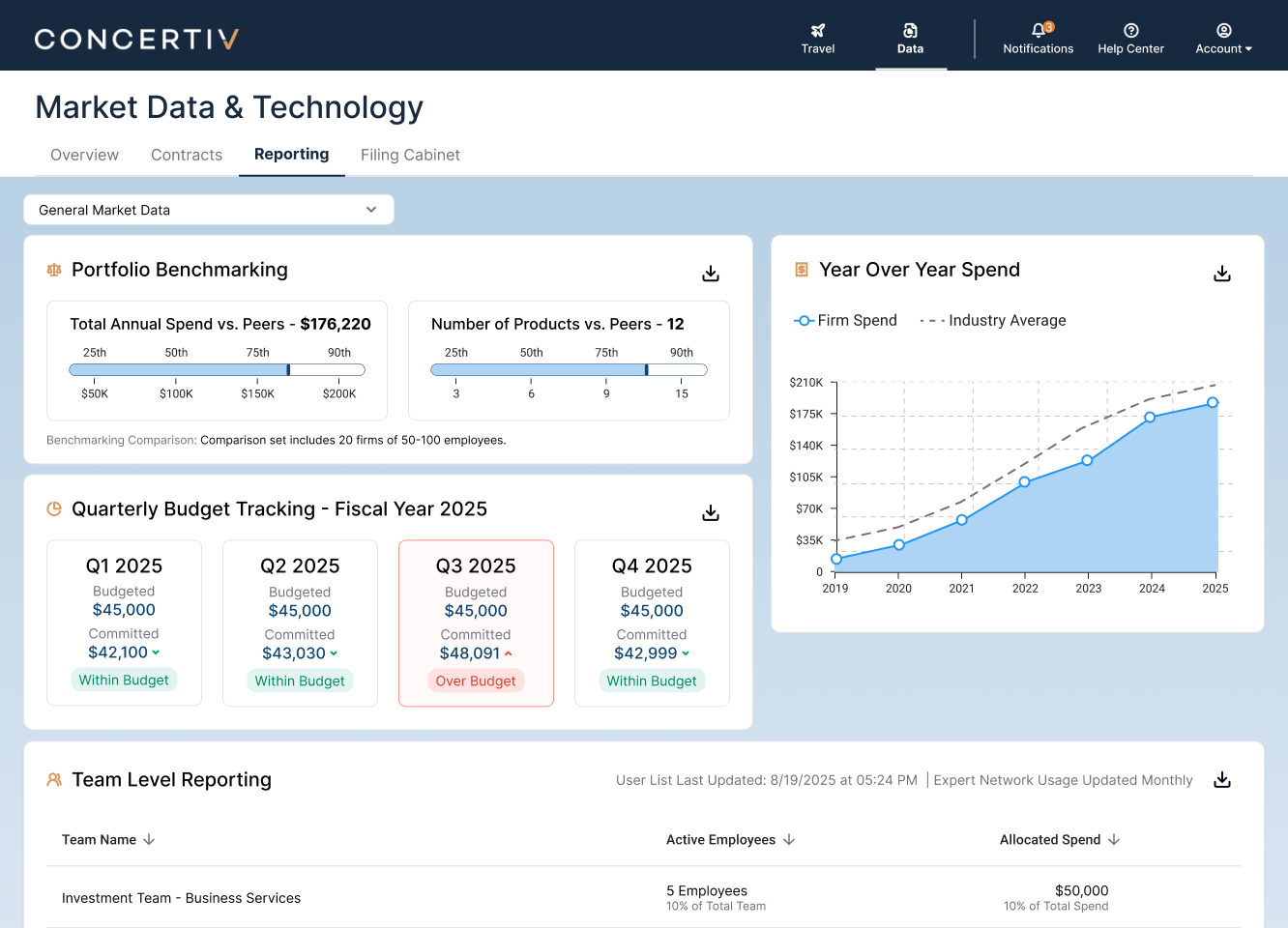
We provide pricing, scope, and entitlement benchmarks based on thousands of active market data contracts across comparable firms.
We show how vendors compare by use case, cost, adoption, and outcomes so decisions are grounded in observed market behavior.
We surface areas of cost leakage, concentration risk, and contract exposure so issues are addressed before they become problems.


What Continuous Ownership Delivers
Market data outcomes that persist because the function is owned, not managed episodically.

Contracts are negotiated and re-priced using live benchmarks from thousands of active agreements at comparable firms.

Vendors are selected, retained, or removed based on actual usage, overlap, and peer adoption—reducing redundant tools.

Users and licenses are adjusted continuously as teams change, preventing inactive seats, excess access, and scope drift.

All charges are reconciled across platforms, vendors, and underlying data feeds to ensure invoices align with contract terms.

A single accountable owner manages renewals, access, and invoicing—eliminating fragmented responsibility and reactive decision-making.

Ongoing visibility into adoption, pricing changes, and vendor behavior informs decisions well before renewal pressure.
“Concertiv has been instrumental in helping us manage the increasing scale and complexity of the firm’s market data assets and travel needs.”
